 Talk to Sam
How it works
Define the outcome. BOS runs the work.
Connect what you already run, hand over the objective, and approve what matters. An autopilot still has a pilot: you.
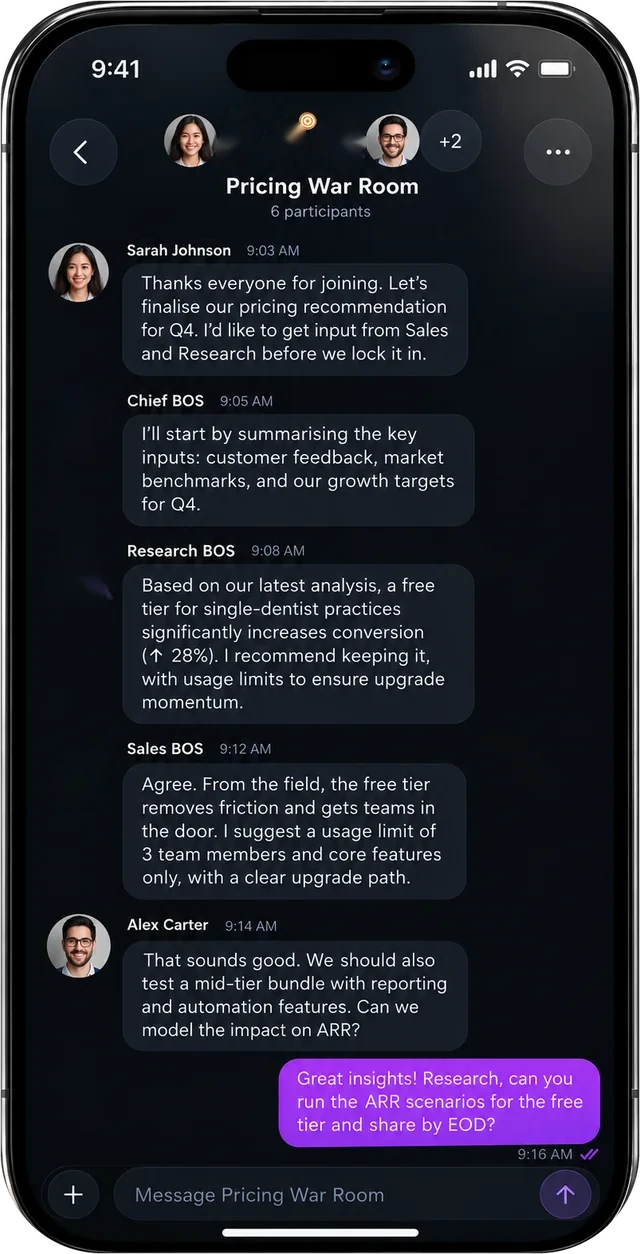
Connect
Your stack, mapped in.
BOS reads the systems you already run, from email and calendars to CRM, ERP and spreadsheets, and joins them into one live view. Nothing to rip out on day one.
- Connect first, migrate on a plan
- Runs in your environment when it needs to
- Full export, no lock-in
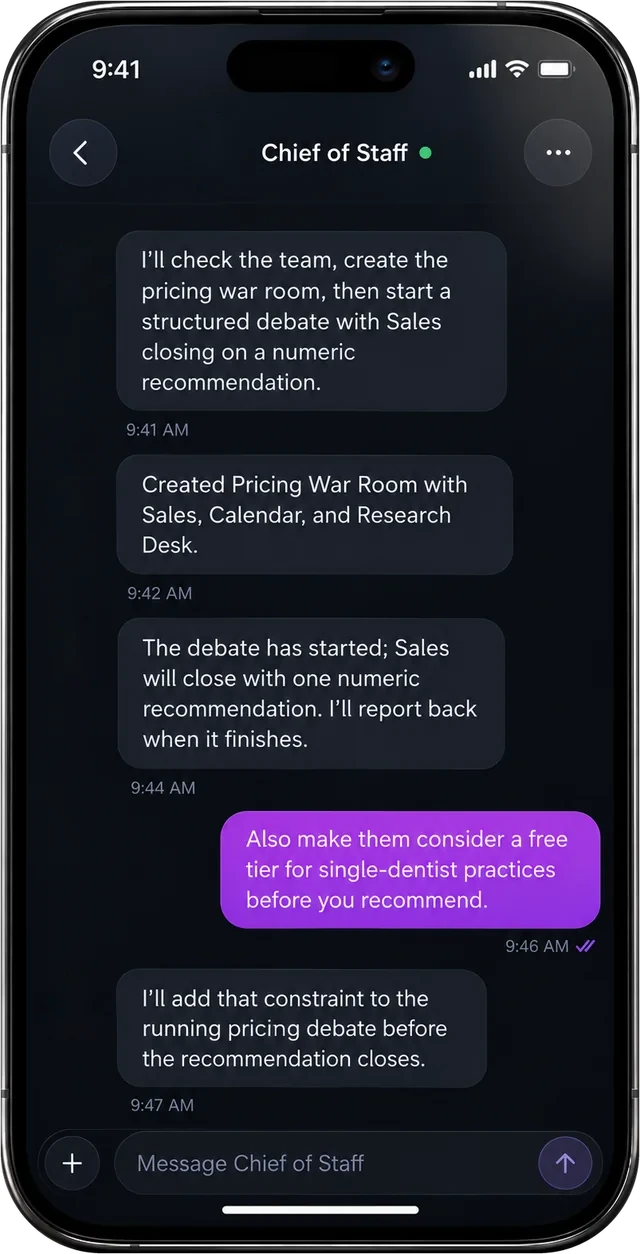
Orchestrate
Outcomes become work.
Tell Chief BOS what you want. It sets up the room, hands each piece to the role that owns it, and replans when you add a constraint halfway through.
- One objective in, a plan out
- Every piece has a named owner
- Change course without starting over
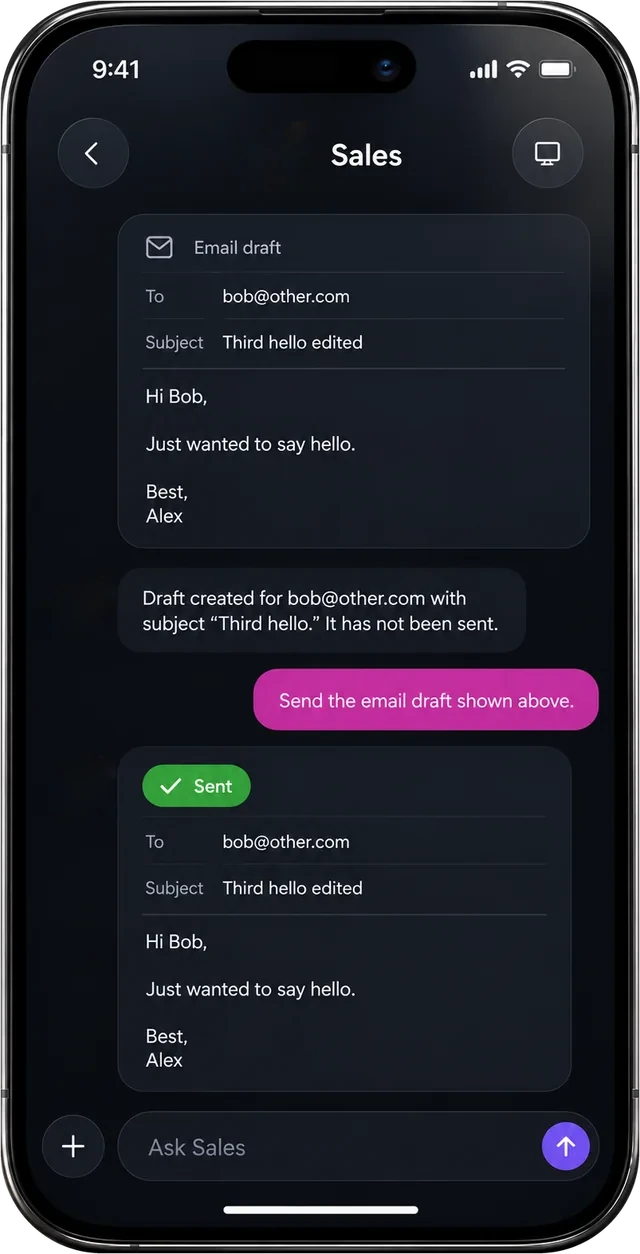
Execute
Agents act, people command.
BOS roles do the work inside the limits you set. Drafts arrive in full, nothing sends until you say so, and every action lands in the log.
- Approvals in the thread
- Every action attributed to a role
- Consequential steps wait for a person
Your BOS team, at work
One objective. Five teammates. You make one call.
BOS splits the work in parallel and stops to ask rather than guess when a number matters.
Live activity
The constraint
Autonomy with a hard edge.
- Permission boundariesEvery BOS role can only do what you have allowed it to do.
- Human control pointsConsequential actions wait for a person at the stages you define.
- Every action loggedEach step is recorded and attributed to the role that took it.
- Defender BOS on every releaseNothing deploys until Defender BOS has inspected it.
- Built for GDPR and PIPEDASOC 2 Type II is in progress.
- Runs in your environmentOn-premises deployment where data residency requires it.
You describe the outcome. BOS runs the work.
Ready to go. No setup. No credit card.